


How much does a wedding DJ cost in San Diego?
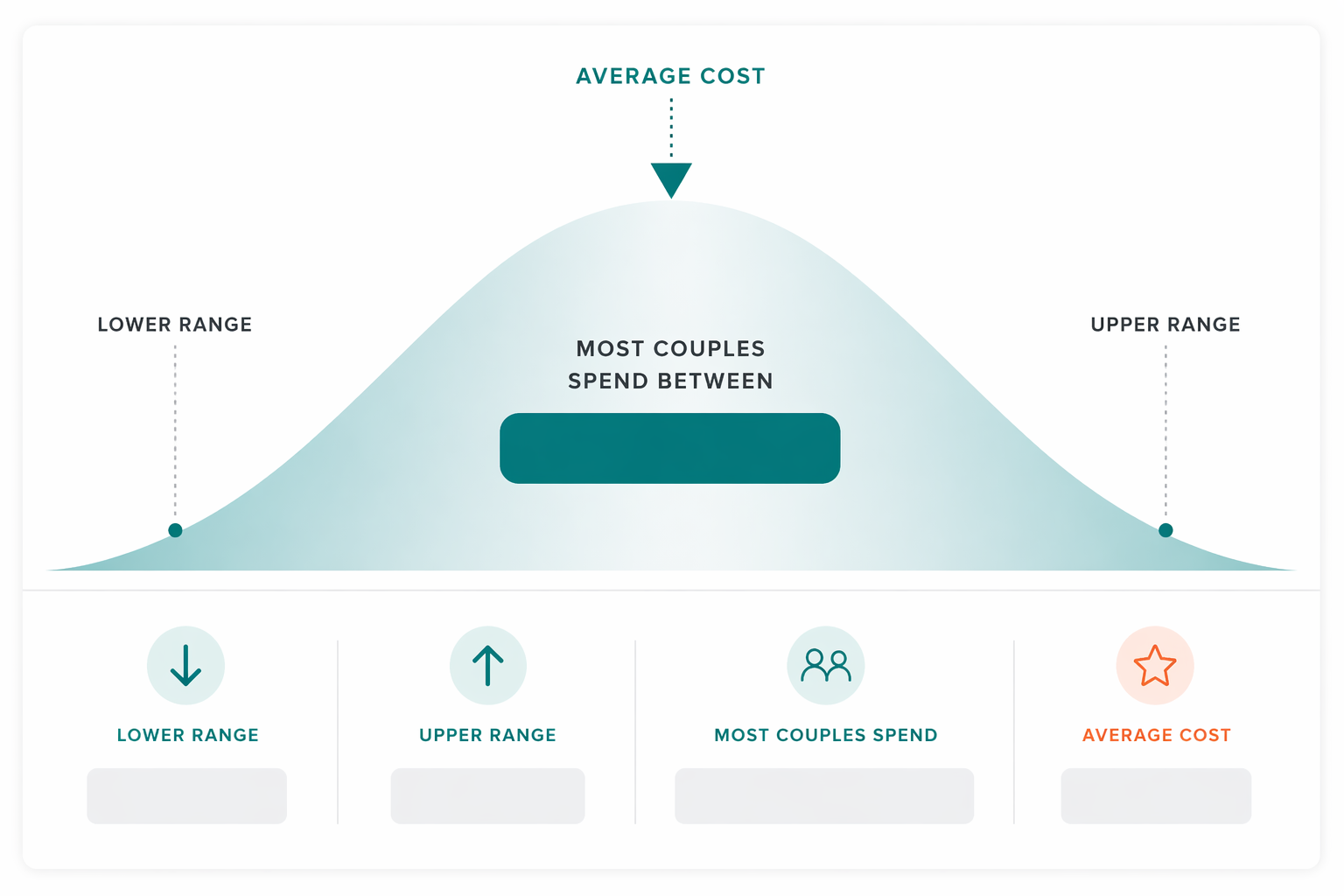
Most San Diego couples spend roughly $1,200 to $2,500 on a wedding DJ. A straightforward four-hour reception with one experienced DJ and a standard sound system tends to sit near the middle of that band. Packages that cover the ceremony, cocktail hour and a full reception — with MC duties and a second sound setup outdoors — commonly run higher, into the $2,500 to $5,000 range.
Below about $800 you are usually looking at a part-time or newer DJ. That is not automatically the wrong choice, but it is a different product: fewer backup systems, less experience steering a room, and often no MC work included.
What moves the price
Five things account for most of the spread between one quote and another.
Experience. The gap between a weekend hobbyist and a full-time wedding DJ is the single biggest factor. You are paying for someone who has run several hundred receptions and knows what to do when the timeline slips.
Hours. Most packages are priced around four to five hours of reception coverage. Adding the ceremony and cocktail hour usually means a second sound system and a second setup, not just extra time.
Your date. San Diego’s peak stretch runs from late spring through October, and Saturdays in that window are the most contested dates of the year. A Friday, a Sunday, or a date between November and March will often come in noticeably lower.
Where you are getting married. A downtown or Mission Bay venue is an easy load-in. A ranch in Julian, a property in Ramona, or a site up in North County inland can add a travel fee, and a ceremony spot a long walk from the parking area can add a setup charge.
What is bundled in. Lighting, extra speakers, wireless mics for the ceremony and a photo booth are often quoted as separate lines rather than included.
What you get at the average
A San Diego package in the middle of the range typically covers a planning consultation, four to five hours of reception coverage, MC and announcements, a professional sound system with backup gear, wireless microphones for toasts, and setup and teardown on the day. Most DJs will also build a custom playlist from your must-play and do-not-play lists, and coordinate the timeline with your venue and planner.
The hours you do not see are part of the price. Playlist building, timeline planning, a walkthrough call with your coordinator and travel on the day all sit behind the number on the quote.
Add-ons that raise the cost
- Uplighting around the room — commonly a few hundred dollars, depending on how many fixtures.
- Dance floor lighting and effects, priced above basic uplighting.
- A separate ceremony system with a lapel or handheld mic, which most outdoor San Diego ceremonies need.
- Cocktail hour coverage in a different part of the property.
- A photo booth, often sold by the same company at a bundled rate.
- Overtime, usually billed per hour and agreed on the night.
Ask about insurance before you book
Most San Diego venues require vendors to carry liability insurance and to file a certificate naming the venue as additionally insured. Ask any DJ you are considering whether they are insured and whether they have supplied a certificate to your venue before — a professional will answer immediately. If they cannot, you may find out a week before the wedding that your venue will not let them set up.
It is also worth asking who is actually showing up. Larger companies book you with a brand and assign a DJ later. That is a normal way to operate, but you want the name in the contract and the chance to meet them.
How to save without downgrading the party
- Move off a peak Saturday. A Friday or Sunday, or any date between November and March, is the largest single saving available.
- Book a DJ instead of a band. Live music in San Diego generally starts around where DJ packages top out.
- Trim the hours, not the coverage. Four focused hours of dancing usually beats six hours with a thinning room.
- Use the venue’s existing lighting. Some San Diego properties already have uplighting or bistro lights, which makes an add-on unnecessary.
- Bundle deliberately. If you want a photo booth anyway, one company covering both is often cheaper than two.
- Compare like with like. Get quotes broken down by hours, equipment and add-ons so the numbers are actually comparable.
What to ask before you sign
- Which DJ will be at our wedding, and can we meet them?
- How many hours are included, and what is the overtime rate?
- Have you worked at our venue before?
- Do you MC, and how much of the timeline do you run?
- What backup equipment do you bring?
- Are you insured, and can you send a certificate to our venue?
- What is quoted separately — lighting, ceremony sound, cocktail hour?
- How do you handle requests from guests on the night?
Tipping is common but not required. Ten to fifteen percent is a normal range if the service was good.


