

How much does a wedding planner cost in San Diego?
What you pay depends almost entirely on which of three quite different services you are buying.
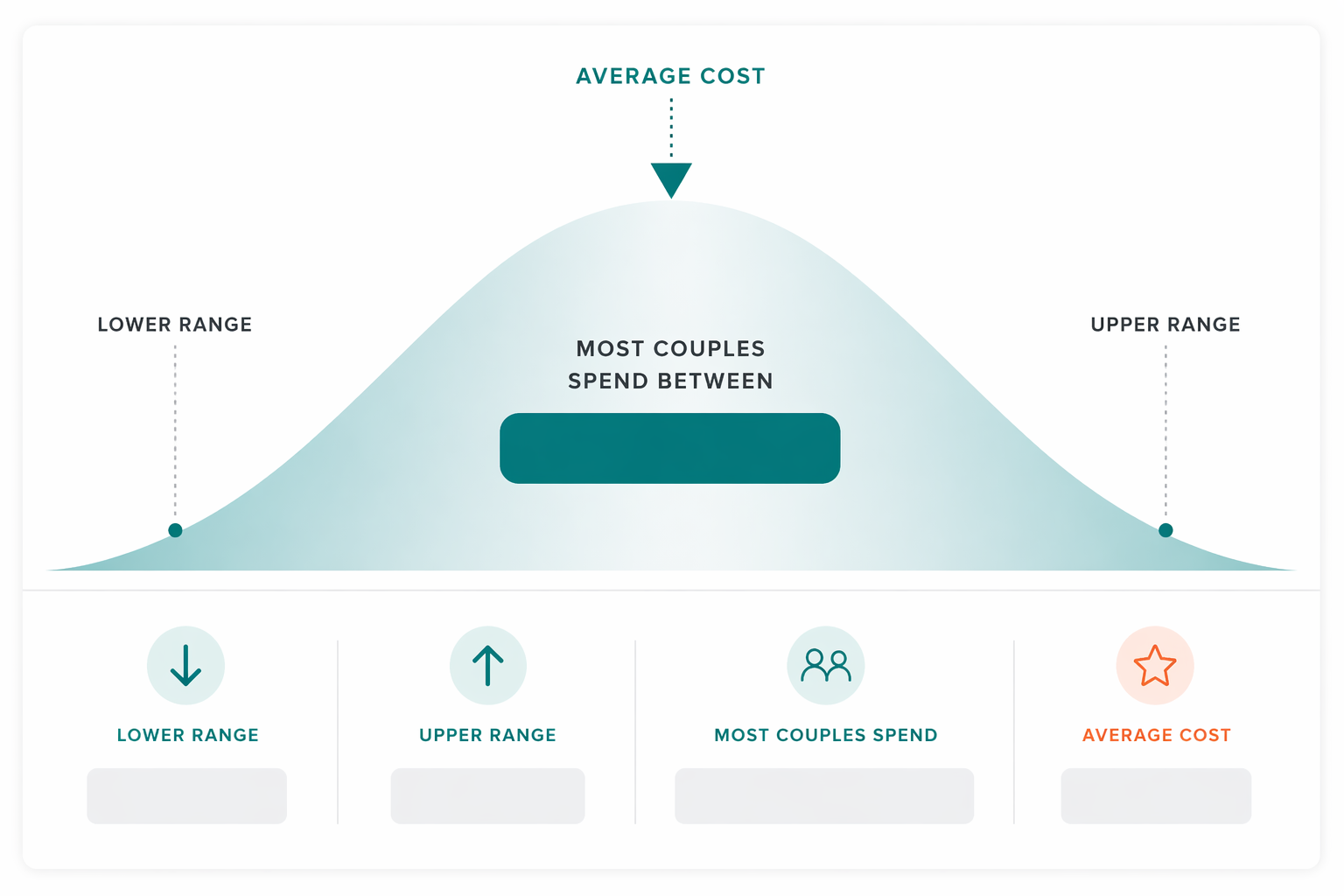
Month-of or day-of coordination — someone who takes over the timeline in the final weeks and runs the day — commonly runs around $1,500 to $3,500 in San Diego.
Partial planning, where a planner joins part-way through and helps with vendors, design and logistics, typically falls between $2,500 and $6,000.
Full-service planning from engagement to the wedding day generally runs $5,000 to $15,000 or more, with high-end designers well above that.
Some planners charge a percentage of the total wedding budget instead of a flat fee, usually somewhere in the region of ten to twenty percent. A common budgeting rule of thumb is to allow roughly ten to fifteen percent of the total for planning and coordination.
What moves the price
Which service you buy. The gap between day-of coordination and full-service planning is the largest factor by far, and the two are often confused when couples compare quotes.
The size and complexity of the wedding. Two hundred guests across three locations takes more hours than sixty guests at one property.
Design work. A planner who also designs — concept, palette, renderings, sourcing — is doing a second job, and it is priced as one.
Experience and demand. Established San Diego planners with long vendor relationships book out early and charge accordingly. Those relationships have real value: a planner who works with a venue regularly knows its quirks and its staff.
Your date. Peak season from late spring through October, and Saturdays in particular, are where availability is tightest.
Travel. A wedding in Julian, Ramona or Temecula-adjacent North County may carry travel time that a downtown wedding does not.
What you get at the average
A San Diego coordination package usually starts four to eight weeks out: the planner reviews your contracts, builds the timeline, confirms every vendor, runs the rehearsal, and manages the wedding day from setup to strike. That last part is the point — it is the difference between you fielding questions in your wedding clothes and someone else doing it.
Full-service adds everything before that: budget building, venue search, vendor sourcing and negotiation, design, guest logistics, and regular meetings across the whole engagement.
Worth knowing: a venue coordinator is not a wedding planner. The venue coordinator works for the venue and manages the property, the catering and the staff. They will not chase your florist, build your timeline or fix your seating chart. Many San Diego couples discover this late.
Add-ons that raise the cost
- Additional assistants on the day, usually needed above roughly 150 guests.
- Design and styling as a separate service.
- Rehearsal-dinner or welcome-party coordination.
- Guest management — hotel blocks, transport, welcome bags — which matters more the more people are travelling in.
- Extra site visits beyond those included.
- Overtime, if the day runs past the contracted hours.
Insurance, contracts and vetting
Ask whether the planner carries liability insurance. Many San Diego venues require it of every vendor on site, and a planner is the one person there all day.
Ask directly how many weddings they take on your date and that weekend. Some planners run several with a team; that can be perfectly fine, but you should know whether the person you met is the person who will be there.
Ask how they are paid by other vendors. Most planners recommend from a trusted list and take nothing. Some receive commissions. Neither is disqualifying, but you are entitled to know which, because it affects whose interest a recommendation serves.
Get the scope in writing in plain terms: how many hours on the day, how many meetings, what happens if they are ill, and what the cancellation terms are.
How to save on planning
- Buy coordination rather than full planning if you enjoy the organising and only need the day itself run.
- Book coordination early anyway. It is the one wedding service that is cheap relative to what it protects, and it is what stops a small problem becoming a visible one.
- Prefer a flat fee to a percentage if your budget is likely to grow.
- Take an off-season or weekday date, where planners have more availability.
- Come organised. Fewer meetings and clearer decisions genuinely reduce hourly-based scopes.
- Check what your venue already provides before paying twice — but do not mistake a venue coordinator for a planner.
What to ask before you book
- Which service is this — coordination, partial, or full-service?
- When do you start, and how many hours are you there on the day?
- How many weddings do you take on our weekend?
- Will you personally be there, and who else is on the team?
- Do you receive commissions from vendors you recommend?
- Have you worked at our venue?
- Are you insured?
- What are the cancellation and postponement terms?


